
Like
0
Liked
Liked
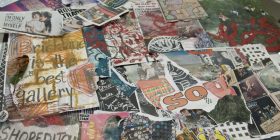
This is a photo of a plant I took a few months ago in a coffee shop using a CCD. I used to sit in this spot to relax and draw, and I thought this corner had rich colors. I loved the purple petals and the vintage feel. So I decided to use this photo to start drawing.
2. I used the invert color function on my phone and got a surprising color effect, so I painted according to the picture. I turned the picture upside down, and the feeling of the painting was completely different, it became weird, I started to fantasize, added black, and the colors became richer.
3. I changed the order of painting. I first painted the large blocks with gouache, and then added details with colored ballpoint pens. This created a new effect and gave the picture a sense of layering. Flowers were no longer plants, but pets in my imagination.
4. I tried to be abstract, using lines to divide the colors and pictures. I tried new bright colors to make the whole painting brighter. It was interesting and inspired my understanding of color.
5. I used gouache to draw the general color, I imagined blue flowers, and then I used a black liner pen to overlay different pattern lines on the surface. I felt the effect of superimposing layers, and I liked it very much.
6. In this painting, I became bolder and tried exaggerated and random repeated lines. I imagined that the flower was blooming vigorously, and the sunlight and colorful colors were radiating outward with the flower.
7. In this painting, I used simple geometric shapes and lines to depict the plants. I think this makes the picture neater. The leaves are sharp triangles, which seem a bit sharp, and the flowers might break when they fall, which reveals a story. I think this painting could also add some background patterns to make the color scheme less monotonous.
8. In this painting, I used black gouache to paint a flower, creating a color contrast with the purple flowers, like life and death. The seemingly neatly-governed weeds entwine around the flower’s roots, seemingly binding them together.
9. In this painting, I focused on the shape, texture, and color of the flowerpot, which resembles a large, multicolored cake. The weeds are blue, like water or a fountain, imbued with life. I like the grain of the table legs; I should have drawn them in more detail, using a liner, for a better effect.
10. I captured a small section of the reference image. I felt the window was like a picture frame, and the plants withered and dried up when they entered the darkness, struggling to grow sideways. I think if I had colored pencils, I could paint it in even more detail, highlighting the changes that the darkness had on the flowers.
REFLECTION
During the Talking Color unit, I gained new insights and ideas about color. Different painting orders can create completely different effects, which is very inspiring. I feel that my limited tools don’t allow for a more diverse effect. If I had colored pencils, markers, and crayons… I could have created a different style. During this process, I used gouache, watercolors, fiber pens, and colored ballpoint pens, combining them in my paintings. I enjoy the sense of layering and the clash of colors, but I need to be careful about controlling the brush thickness, which affects the precision of my details. I realized that a single image can be transformed by applying different techniques, such as color shifts or zooming in on a specific area. My paintings mostly present a two-dimensional effect. I should try creating three-dimensional patterns, which is also very interesting, and I believe the results will be surprising. In my mind, plants gradually take on character and personality, no longer static. I like to give plants life, making them seem like individuals, embellished with unique colors. I gained a lot of insights during this unit, which has inspired me and given me diverse inspiration, which I hope to reflect on fabrics.
REFLECTION
I learned a lot in the Talking Pattern unit. I developed a concept for pattern development. I extract the desired elements from an image and then begin drawing, developing, innovating, and imagining. I use different drawing materials, such as colored pencils, gouache, crayons, acrylics, and fiber pens. Each medium brings a different effect. The combination of lines and patterns creates new patterns, which then continue to develop. I enjoy overlaying different pattern elements and combining them to create new patterns and unique effects. This often inspires me to create fabric prints. I also like to create repetitive and continuous patterns, such as the fabric print in the picture. However, I feel that I need to add more imagination to allow for more room for development. My patterns are relatively concrete, but a more abstract approach might also be effective.
In the first part, “Talking Colour,” I started by recording everyday details I discovered in London. These included plants, buildings, crafts, scenery, and animals. Many of the plants I drew were found during my visit to the Horniman Garden Museum. I used different materials to create my artwork, like oil pastels, watercolours, markers, and pastels. I also tried to added my own ideas of the colours to make the artworks more interesting . At Horniman Gardens, besides plants I had saw a fox. I tried to use watercolours to show its details and colours. My favourite piece is the first drawing for this part in the blog of the duck. I saw it by a river an afternoon while walking to the station. I thought the water ripples around it were very interesting. I wanted to use different colours to show the texture of the water. So I chose red and orange oil pastels. This makes the duck stand out and gives the ripples a bold, fiery feeling around it and I think this was a good try . With the work below the duck‘s drawing, I drew the stage set from “Les Misérables” that I watched at the Queen’s Theatre,and I had using the same idea from the stage set while i observing it to design and complete the whole drawing. The colours I used were inspired by the screen on stage before the show started,so I used gradients of brownish-yellow and blue . Overall for the “Talking Colour” section, I experimentally used several different art materials. But I think I could have been bolder with colours. I noticed my comfort zone is mainly with less bright colours, and better at using watercolours. Maybe next time I can try more bold colour combinations later to make my work more interesting.
In the “Talking Pattern” section, my view point of drawing things had changed compared to Part 1 “Talking Colour”. In Part 1, I drew all the objects I saw in a direct and detailed way. But in this section, I tried to drew the things, plants, or food I saw in a bigger way, or only drew parts of them. In the second picture, I actually drew the texture of fried chicken. Thinking that I needed large areas of color, I chose ink as a base material. I used a big brush to put down the shape, then layered the colors to blend them. After that I used a white marker to add the highlights. I found this way of painting very experimental and fun for me. Besides a few pictures at the end where I used oil pastels, markers, and watercolors to draw plants, I also tried using stencils for creation in this section. I used two sets of stencils. For the first picture, I cut a diamond-shaped stencil which had shapes of flowers and leaves inside. I had arranged them in a row, used blue ink on the cut-out parts, and then simply drew the flower centers with black watercolor. This was a very interesting try compared to my other purely hand-drawn works. For pictures three to five, I made a stencil based on a beautiful structure on a house roof I saw at the Horniman Garden. I traced my source material onto transparent paper and carved it out. Then I tried different things with it: I tried watercolor, filled the empty spaces with a white marker, made some spontaneous extended designs, and created works by photographing its shadow. This was a wonderful experience and gave me a lot of inspiration, as I did different tries with one stencil and saw many possibilities. Overall for this section, I think besides adding more designs next time, it would also be useful to make some stencils that can be used multiple times to explore more arrangements and effects.
REFLECTION
throughout the duration of this project I really enjoyed the creative freedom it allowed me to have and the way it led me to explore who I am as an artist by experimenting with different medias, techniques and ideas.
I first started to base this project on the view out of my bedroom window however it soon progressed to being based on my thoughts, imagination and opinions in moving to London. I wanted to capture the surreal experience of moving to London for university and how it’s affected me. My works are colourful, sometimes peculiar, with surreal elements incorporated within like the red man from the road crossing sitting on a traffic cone rocket. I chose to add these elements as I feel it captures the magic bubble I’ve been in since moving to a new city and pursuing the dream I never thought would come true. These elements portray the idea that never in my wildest dreams would I move to London and since moving here, even the mundane like crossing the traffic lights, is exciting and new.
This idea soon developed further as I started to experiment with patterns as opposed to just colour. I wanted my patterns to imitate what you see when you close your eyes. The red and circular patterns replicate the shapes and lights you see when you go to sleep. I incorporated swirls and dots to imitate the patterns that appear behind your eyelids when you are trying to sleep, the last things you see before you start to dream. I really just used this project to see where my imagination took me and let it grow into wherever it led me which was fun to watch happen.